
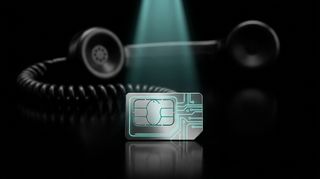
The SIM Swap: How One Phone Call Hands a Stranger Your Entire Digital Life
Imagine waking up on a completely normal morning. You reach for your smartphone, tap the screen, and notice a tiny, terrifying detail in the upper corner: No Service. Most people assume this is a minor carrier outage, a billing error, or a temporary glitch. They restart their phone, shrug it off, and go about their day.
But behind the scenes, a highly coordinated digital heist is already underway.
At that exact moment, a stranger hundreds or thousands of miles away is receiving your personal text messages, answering your calls, and systematically triggering password resets for your primary email, your bank accounts, and your cryptocurrency wallets.
One call to your mobile carrier. A convincing story. Your phone number is now in someone else's hands — and with it, every account protected by SMS verification. SIM swap attacks don't require sophisticated malware, elite hacking skills, or physical access to your device. They just require your mobile carrier to believe the wrong person.
The Anatomy of a SIM Swap Attack
To understand how devastating a SIM swap attack can be, you first have to understand how shockingly simple it is to execute.
No Hacking Required
When we think of cybercrime, we picture dark rooms, hooded figures, and complex lines of malicious code designed to crack firewalls. A SIM swap (or SIM porting) attack relies on something far more vulnerable than software: human psychology. This is purely a social engineering attack.
An attacker gathers basic, publicly available information about you—your name, phone number, address, and perhaps the last four digits of your social security number, which have likely been exposed in dozens of corporate data breaches over the last decade.
Armed with this dossier, they call your mobile carrier's customer service department. Acting frantic, they claim they've lost their phone or that it was destroyed in an accident. They need their phone number ported to a new SIM card immediately so they can contact their family or get to work. If the first customer service representative gets suspicious, the attacker simply hangs up and tries again until they find a gullible, overworked, or sympathetic employee willing to bypass standard security protocols to "help a customer in need."
The moment the carrier hits "Enter" on their keyboard, your physical SIM card goes dead. The attacker's SIM card goes live.
The Illusion of SMS Security
For years, the cybersecurity industry and tech giants have hammered a single piece of advice into the public consciousness: Turn on two-factor authentication (2FA).
As a result, most people use SMS as their second factor for security, assuming a code sent directly to their personal phone makes them virtually impenetrable.
When Two-Factor Authentication Backfires
The SIM swap flips that security model entirely on its head.
Once an attacker ports your number, two-factor authentication stops protecting you and instantly starts working against you. It is the ultimate Trojan horse. When the attacker goes to your banking portal and clicks "Forgot Password," the bank dutifully sends a six-digit reset code to "your" phone number. That code now lands directly in the attacker's hands.
Every login code, every password reset link, every bank verification prompt is systematically routed to the criminal. Because the bank trusts the phone number, they trust the attacker. Within minutes, you are locked out of your own life. The very mechanism designed to keep intruders out becomes the skeleton key they use to walk right through your digital front door.
The High-Value Target Paradigm
While anyone can be the victim of a SIM swap, these attacks are almost always targeted. Cybercriminals are opportunistic, but they also evaluate the return on investment for their time.
If you hold significant assets—whether financial portfolios, cryptocurrency, highly sensitive corporate data, or even a massive social media following—you are operating in the crosshairs. You are considered a high-value target.
High-value targets are attacked precisely because the massive payoff easily justifies the effort of repeatedly calling carrier customer service lines. Mobile carriers are the absolute weakest link in the modern authentication chain. Their business model is built on frictionless customer service, not military-grade operational security. By relying on a telecom company to protect your millions, you are effectively outsourcing your wealth protection to a $15-an-hour call center employee.
How to Defend Your Digital Life
If you treat your phone number as a public identifier rather than a secret security token, your entire digital posture changes. Here is how you must secure your accounts before you become a target.
Move Off SMS Authentication Immediately
You must sever the link between your phone number and your digital assets. Log into every critical account—starting with your primary email, bank, and crypto exchanges—and disable SMS two-factor authentication. Replace it with an authenticator app (like Google Authenticator, Authy, or Duo) which generates codes locally on your physical device without relying on the telecom network.
Better yet, upgrade to a hardware security key (like a YubiKey). These physical USB/NFC devices must be physically touched to authorize a login, rendering remote SIM swap attacks completely useless.
Implement Carrier SIM Lock PINs
Call your mobile carrier today and demand to set up a "SIM Lock PIN" or "Port Freeze." This is a secondary, dedicated passcode that must be spoken to a representative before any changes can be made to your account or SIM card.
Make this PIN highly complex, store it in a secure password manager, and never reuse it. While social engineering can sometimes bypass even these PINs, it adds a layer of friction that stops the vast majority of lazy attackers in their tracks. Surprisingly, most major carriers offer this vital feature, yet almost nobody uses it.
Elevate to HAWK ONE Standards
For high-value individuals, patching a broken system is not enough; you must bypass the broken system entirely. If you hold significant assets, whether financial, crypto, or reputational, treat your phone number as a vulnerability, not a security feature.
HAWK ONE members receive entirely hardened mobile devices equipped with secure, encrypted communication channels that bypass carrier-level exposure entirely. By removing the telecom provider from the security equation, HAWK ONE eliminates the threat of SIM swapping, ensuring that your digital life remains firmly in your own hands.
The Bottom Line
Convenience is the enemy of security. A system where a simple phone call can hand a total stranger the keys to your financial and digital kingdom is a system you can no longer afford to trust. Take the time today to decouple your security from your phone number. Tomorrow might be the morning you wake up to "No Service."